

The Cape Flats Erica (Erica verticillata) – this is one of the original plants that wewre found in a garden in Austria.
Many people now know the story of this erica species that was only found in the southern suburbs of the Cape Flats and was exterminated by the 1950’s. It was thought to be extinct, but five individual plants were located around the world in gardens; in Pretoria, Kirstenbosch, England and Austria (two plants). The latter plants were taken from the Cape sometime in the 1790’s and were returned to the Cape in early 2000’s, having been out of Africa for over 200 years.
In 1997 Anthony Hitchcock (of Kirstenbosch) and myself (Dalton) planted over a hundred cuttings of these five plants on the “Erica field” which is found in Rondevlei at the northern end of Peninsula Rd (opposite the Peninsula Superette). This particular species has been classified internationally by botanists as “Extinct in the Wild”; and although plants had been established in the wild, it would take three generations until they can be removed from the extinct list.
These plants need fire to propagate and since the planted population had passed maturity, the need to put a fire through them arose; in March 2013 a large section of it was deliberately burnt. The adult plants died, as they are designed to do; but no new seedling plants were found during all of last year and it was feared that the adult plants had failed to produce seed and the preceeding 15 years had been in vain.
This has not been the case and today I located at least nine tiny seedlings that are the first generation of this species to come up after the fire and take the first step on the road towards the return of this species from the extinction list and to its natural habitat on the Cape Flats.

Young Erica verticillata seedling with the old dead adult plant in the background.

Young Erica verticllata (Cape Flats Erica) having germinated after last year’s fire; the first of its kind to have germinated in the wild in over 60 years.
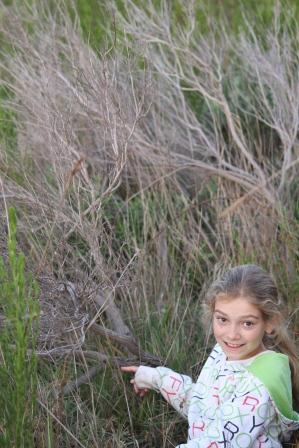
My daughter pointing out the young seedling; behind her is the old skeleton of an adult plant that died during the 2013 fire.
Another marvelous contribution Dalton.
Well done!
Splendid stuff well done- we also have the plant here at the Bottom Roads Sanctuary on the Northern Shore I guess we will need to burn within 2 years
What a precious addition of new life and beauty to our local world. Thanks so much, and to Kia for pointing it out! xx
Looking forward to seeing the flowers!
Thank goodness they came up. I’m sure you were holding your breath.
Holding my breathe very hard!!
Excellent Dalton & Kia…..how about some seeds for our garden 🙂 ? Angie has very green fingers
Hi Simo
It is rather hard to grow from seed, the plants are however available from Neil Major at the nursery at Rondevlei.
what interesting info, glad theyre in your rondevlei area. Did it also disappear from the mountains in cape point and above simonstown?
Hi Bev ing
No, these erics were only ever found on the lowlands of the Cape Peninsula, from Retreat, Bergvliet,Heathfield, Southfield to near Rondebosch Common – no where else on earth. They are what the suburb of “Heathfield” got its name from.
There are over 400 species of Erica in the Western Cape and over 700 in the family in the Western Cape.
Well done Dalton on this wonderful initiative….another great success story from Rondevlei!!
Fantastic Dalton. Well done